

Academic Planning
Total number of credits: 60 ECTS
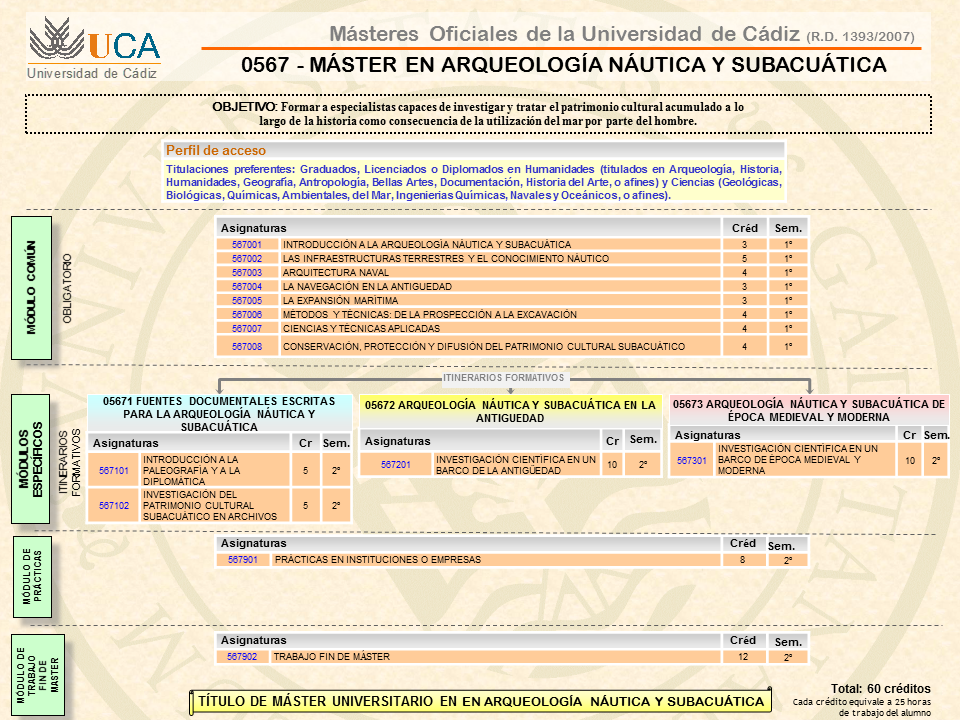
The curriculum is organised through a structure of Modules and Courses, which are consistent with the general objectives and ensure the acquisition of the programme’s competences, as well as with the different subject areas that make up this Master’s programme.
Chronologically, the Master’s programme is developed in four parts:
- Common module (30 ECTS credits) (1st semester).
- Specialised module (10 ECTS credits) (2nd semester).
- External Internship module (8 ECTS credits) (2nd semester).
- Master’s Thesis module (12 ECTS credits) (1st and 2nd semester).
This module provides, in a predominantly theoretical way, all the knowledge from the different disciplines and subdisciplines that make up the field of nautical and underwater archaeology, offering these technical foundations to students. Introductory topics and general historiography will be addressed, as well as navigation, legislation, geography and topology, applied sciences, restoration and conservation, and the different periods and key milestones in maritime history.
During this module, which will take place mostly through theoretical classes in the teaching building of the Faculty of Philosophy and Letters (University of Cádiz), complementary and mobility activities will be organised for students. For example, activities and guided visits will be scheduled to sites such as the Royal Observatory of the Navy (Cádiz), the city of Huelva and Palos de la Frontera, and the former port of Onuba (Huelva), the La Carraca Arsenal (San Fernando) or Nereo Shipyards (Málaga), as well as activities at the Laboratory of Nautical and Underwater Archaeology (Cádiz) or in other faculties on the Cádiz and Jerez campuses.

Track 1: Written documentary sources for Nautical and Underwater Archaeology.

- The first track (10 credits), predominantly practical, aims to integrate the student into a real research project (no underwater diving required). It focuses on the study of historical documentation held in archives for research in Nautical and Underwater History and Archaeology. It is organised into two courses: “Introduction to Palaeography and Diplomatic Studies”, which addresses the evolution of writing and the main types of historical documents; and “Research on Underwater Cultural Heritage in archives”, which carries out in a practical way the process for archival research applied to the historical investigation of a real case.
- This option is designed for students who do not intend to dive and who prefer to specialise in the study of maritime history and nautical archaeology through research on documentary sources. Training is provided in palaeography, diplomatic studies and document types, with practical work mainly in archives and familiarisation with existing documentation.
Track 2: Nautical and Underwater Archaeology in Antiquity.

- Maximum of 10 places.
- The second track (10 credits) consists of an underwater archaeological intervention at an ancient-period site, aboard the oceanographic vessel UCADIZ, after receiving theoretical training in excavation planning and administrative procedures. It is structured as a single course, “Scientific research on an ancient-period ship”, and its content consists mainly of the practical excavation and investigation of an ancient underwater site.
- Due to the vessel’s logistics and campaign planning, these sea-based modules have a capped intake of 10 places. During the pre-registration process, students must indicate their preferred option, and applicants will be selected based on academic merits.
Track 3: Nautical and Underwater Archaeology in the Medieval and Early Modern periods.
- Maximum of 10 places.
- The second track (10 credits) consists of an underwater archaeological intervention at a medieval/early modern site, aboard the oceanographic vessel UCADIZ, after receiving theoretical training in excavation planning and administrative procedures. It is structured as a single course, “Scientific research on an early modern ship”, and its content consists mainly of the practical excavation and investigation of an early modern underwater site.
- Due to the vessel’s logistics and campaign planning, these sea-based modules have a capped intake of 10 places. During the pre-registration process, students must indicate their preferred option, and applicants will be selected based on academic merits.
Important! Students must choose one of these three tracks. Important! Each track has a maximum of 10 places; places will be allocated according to the date of enrolment and the applicant’s training/experience, until the quota is filled.
Important! To take part in the courses involving underwater intervention (tracks two and three), it will be essential to hold the appropriate diving qualification, which students must have obtained beforehand.
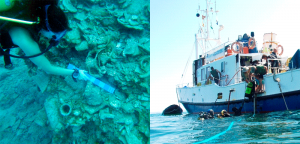
Students undertake internships in external companies or institutions, either national or international, under a prior agreement with the Master’s programme. Through this compulsory course, students will choose the institution (from those offered) that can best help complement and complete their training and professional guidance.
They may therefore participate in projects related to the management, dissemination or enhancement of underwater cultural heritage, as well as in archaeological interventions (survey, excavation, laboratory work and documentation, etc.) for the chosen historical period, or in a documentary research project.
Class timetable, classrooms and exams
The Official Master’s Degree in Nautical and Underwater Archaeology is delivered at:
- Faculty of Philosophy and Letters (Cádiz Campus): Monday to Thursday, afternoons (16:00 to 20:30), in classroom 1.6. Visits to sites or research centres will preferably take place on Fridays.
- The Practical Archive Module is delivered jointly at the Provincial Historical Archive of Cádiz.
- The Research Practice Modules in Underwater Archaeology (Ancient and Early Modern) are delivered aboard the UCADIZ, with a 20-day embarkation period for each.
- Timetables: Class timetable 2024/2025
Enrolment regulations
- Regulation UCA/CG11/2010
- Agreement of the Governing Council of 26 March 2019 approving the amendment to Regulation UCA/CG11/2010 of 28 June 2010 on Admission and Enrolment at the University of Cádiz.
Updates to this regulation will be available at: https://atencionalumnado.uca.es/normativa/
Assessment regulations
External internships regulations
The University of Cádiz has compiled a catalogue of scholarships and grants for postgraduate studies (Postgraduate website), listed below:
- Fundación Carolina scholarships (Learn more)
- MECD scholarships and grants call for Official Master’s studies. (More information)
- Erasmus+ mobility grants for internships and stays. More information: https://internacional.uca.es/erasmus/
- Aula Universitaria del Estrecho. More information at the following link
- Asociación Universitaria Iberoamericana de Postgrado (AUIP). More information: https://www.auip.org/.
In addition, the University of Cádiz has a number of agreements for awarding postgraduate scholarships and grants through external institutions and companies:
- UCA scholarships for postgraduate studies. More information: https://www.uca.es/atencionalumnado/becas-uca. Students may also apply for other scholarships for internships abroad or complementary activities.
- International Mobility Programme (own programme) call. More information: https://internacional.uca.es/estudiantes-salientes/programas-y-becas/
Academic staff
The Master’s teaching staff is made up of national and international specialists, both from the University of Cádiz and from other external institutions collaborating in student training.
Below are two documents describing the basic profiles of the teaching staff (number of lecturers, number of PhD holders, categories and accreditations, teaching merits—where staff are not accredited—, research merits—where staff are not PhD holders—, number of five-year and six-year teaching/research periods, fields of knowledge in which they teach, number of ECTS credits assigned in the subjects):
- P05. Distribution and characteristics of academic staff
- Staff available to deliver the programme
- P05. Training, Innovation and DOCENTIA of academic staff (Master’s)
- P05. Description of the basic teaching staff profile (Master’s ANYS)
- P05. Other indicators on academic staff (Master’s ANYS)
Technical staff
The Master’s programme relies on administrative and support staff (PAS) from UCA, especially from the Faculty of Philosophy and Letters and the Central Service for Nautical Resources and Infrastructures (SCRIN). In particular, delivery of the programme includes collaboration from PAS in the faculties and services involved in the Master’s teaching (porters’ office, administrative assistants, administration and library staff), whose roles include administrative tasks and the management of infrastructures derived from academic activity, which are essential for the proper development of teaching and research in support of academic staff.
Given the organisational structure of the University of Cádiz and with the aim of optimising administrative human resources, administrative and support staff are not assigned to a specific programme; rather, they are available to different programmes taught within a Faculty or on a University Campus.
NOTE: These are administrative and support staff who, while meeting the needs of the Faculty/programme, are not necessarily assigned to the programme. In short, they are shared resources for all programmes taught in the Faculty or sites which, in some cases, are shared with programmes from other faculties (for example, administrative staff of departments located in the Faculty but with additional teaching in other centres). Human resources in the areas of IT, audiovisual services, maintenance, prevention, sports and cultural activities are common to the whole University in teaching, management and research processes.
Undoubtedly, the extensive underwater intervention equipment made available for learning stands out.
Specific resources
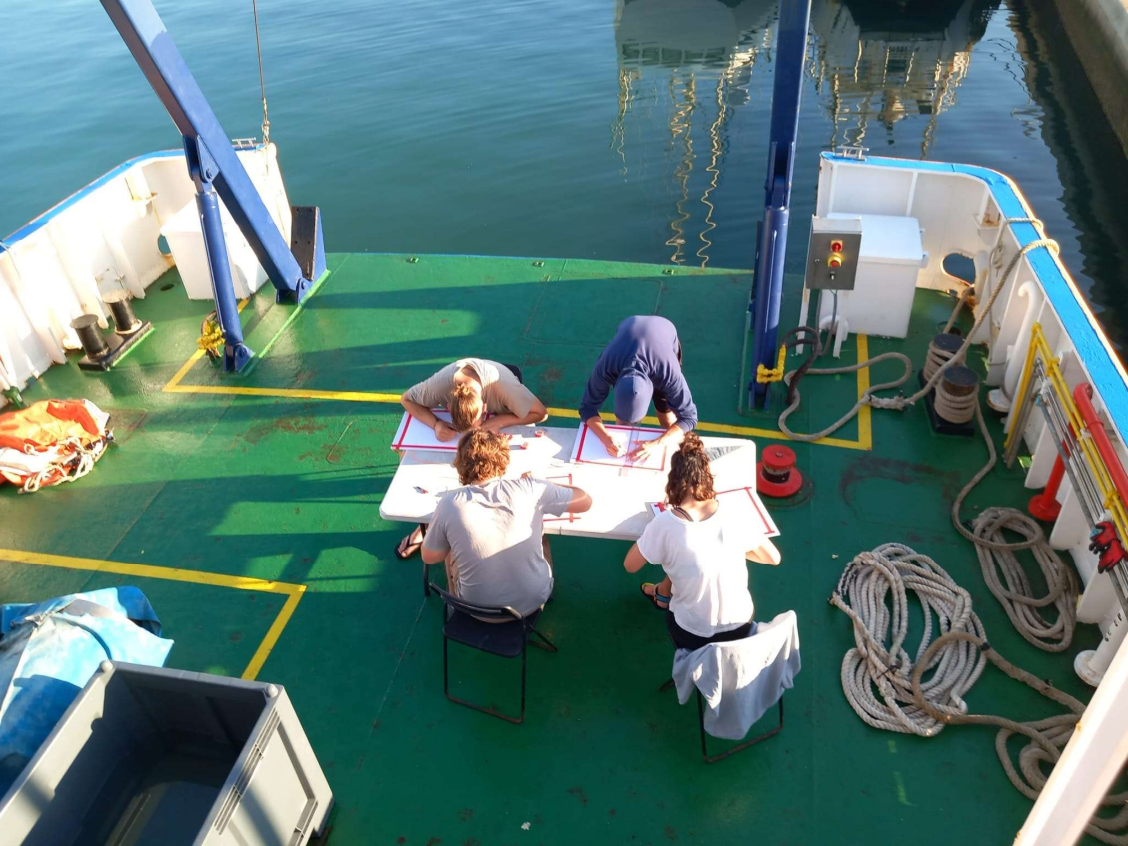
This Master’s programme brings together several departments and faculties and has a significant set of highly valuable infrastructures for practising Nautical and Underwater Archaeology. Among the most outstanding is the 25-metre-long UCADIZ vessel, with the capacity to provide accommodation and meals for 12 researchers during extended campaigns. It is equipped for underwater archaeology with unique equipment in Spain and comparable to international standards (wet and dry laboratories, multibeam sonar equipment, ROV, compressors for filling cylinders, compressors for suction dredges, motor pump, etc.). The programme also benefits from research equipment and spaces provided by UCA’s Laboratory of Archaeology and Prehistory, including cameras, metal detectors, underwater GPS, four suction dredges, consumables for underwater documentation, etc. A fully equipped Conservation and Restoration laboratory is also available, with specialised staff and resources for treating materials recovered from underwater contexts.
In addition to this specific infrastructure, each year there is a sufficiently equipped classroom in the Faculty of Philosophy and Letters at UCA, featuring a multimedia desk, computer, microphones, projector and screen, as well as VGA and USB connections for external data. Beyond classrooms, the Faculty of Philosophy and Letters also has other shared spaces used by the different programmes for teaching and other academic activities.
In this regard, we should also highlight the Teaching and Research Laboratories. As this is a Master’s programme in which lecturers from different departments and faculties participate, students have access to a range of laboratories and services useful for their theoretical and practical training and, above all, for the development of their Master’s Theses, such as the aforementioned Laboratory of Archaeology and Prehistory (LABAP). There are also specialised conservation and restoration laboratories such as those at LEC-PH Laboratory of Studies and Conservation of Historic Heritage, as well as technical equipment from the University of Cádiz’s central services suitable for archaeometry and auxiliary sciences work (SEM-EDX, XRD, TEM, etc.), the Unit of Geoarchaeology and Archaeometry applied to Historic-Artistic and Monumental Heritage (UGEAPHAM), the Testing, Corrosion and Protection Laboratory (LABCYP) and, finally, the Technological and Scientific Diving Unit (UBTC).
SHARED RESOURCES OF THE UNIVERSITY OF CÁDIZ
Library
The Puerto Real Campus Library is a shared library accessible to all students. It provides: 9 individual and group study rooms (for individual or group work, respectively), a training classroom (small rooms with audiovisual and office equipment that can be used by academic and administrative staff for academic or training activities; maximum capacity 15–30 people), a Learning Space (multifunctional rooms used for teaching, with audiovisual and office equipment; maximum capacity 40–50 people) and videoconferencing facilities, as well as laptops for daily loan and for loan by academic year. These spaces can be reserved quickly and easily through http://biblioteca.uca.es.
The Library is located in its own building of 2,736 m2 and offers 390 reading seats and 2,595 linear metres of shelving, of which 1,595 m are open-access and 1,000 m are in storage. The collection consists of a total of 74,250 monographs and more than 1,000 journal titles, covering the areas of knowledge served by the centres it supports.
It also has 35 computers available to users, 60 laptops for loan, and 60 readers and various playback devices (microforms, videos, etc.), as well as 2 self-checkout stations.
The Cádiz Campus has 4 thematic libraries distributed across 4 centres, all accessible to our students. However, due to its collection, the one most used by students of the Master’s in Nautical and Underwater Archaeology is:
The Humanities Library (located at C/ Dr. Gómez Ulla s/n). It offers: 6 study rooms, a training classroom, and laptops for daily loan and for loan by academic year. The Humanities Library is a section of the University of Cádiz Library that meets the documentary needs of users associated with the Faculty of Philosophy and Letters. It supports teaching and learning in the various programmes taught at the Faculty. Its collection includes more than 90,000 multidisciplinary monographs and more than 900 journal titles, mainly covering the thematic areas of Philology, History, Geography, Philosophy, Art and Archaeology. There is also a substantial collection of special materials (CDs, cassette tapes, videos, microforms, etc.), located at the Loans Desk. Most of the library’s holdings are on the Main Floor in open-access shelving. On that floor, distributed across different areas, there are also study rooms with 205 individual reading seats. Books are arranged by subject using a systematic classification, and journals are arranged alphabetically by title. The holdings published in the basement are not arranged by subject. Special materials (diskettes, CD-ROMs, microfiches, etc.) are located at the loans desk and must be requested from staff. Among other services, the library offers: catalogue search, electronic resources, user training, home loans, bibliographic information, interlibrary loan, digitisation and microform reproduction, etc.
Virtual Campus
It should be noted that the University of Cádiz was a pioneer in the use of Virtual Campus tools. At present, the Vice-Rector’s Office for Teaching Resources and Communication maintains UCA’s Virtual Campus on an IT platform using Moodle open-source software. The Virtual Campus is a fundamental tool for university teaching and must therefore be shaped according to the needs of programmes and faculties with agility and flexibility. The unit or vice-rectorate responsible for the Virtual Campus is tasked with developing it and integrating the services requested by the programmes and faculties within the University. Likewise, any incidents that may arise during academic activity are addressed by the unit or vice-rectorate responsible for the Virtual Campus. This platform is used by all courses of the Master’s in Nautical and Underwater Archaeology.
Internet access
Our Faculty has three different Wi-Fi sub-networks serving all stakeholder groups. The ucAirPublica network provides general service to all students; the ucAir network is available to academic and administrative staff; and the Eduroam network offers service for visiting lecturers. Network coverage spans all common areas (corridors, cafeteria, departments, dean’s office) as well as teaching spaces such as classrooms, laboratories, study rooms and work rooms.
User Support Mailbox (BAU)
Users’ queries, complaints and claims, reports of teaching-related incidents, suggestions and commendations are channelled through the User Support Mailbox (BAU) (http://bau.uca.es), which forwards them, depending on their nature, to the corresponding persons responsible (faculties and departments). This tool was awarded the Best Practices Prize from the Telescopi Experience Bank (UNESCO Chair in University Management) in December 2009.
The operation of the BAU is regulated by the rules approved by Agreement of the Governing Council of 19 December 2016 (https://buzon.uca.es/cau/index.do).
User Support Centre (CAU)
To guarantee all the services and material resources necessary for the normal operation of programmes, the University of Cádiz has a User Support Centre (CAU), available at https://cau.uca.es/cau/indiceGlobal.do. The CAU is the electronic tool used to request services and resources in a structured and systematic way and includes a detailed list of services offered, organised by responsible area.
The CAU thus constitutes the main one-stop shop for UCA services, streamlining the processing of administrative and service requests and providing users (any member of the university community) with a single system for resolution and follow-up.
The services and resources related to the programme’s operation that are provided through the CAU include: Academic Planning and Staff, Quality Management and Programmes, Campus Administrations and Secretariats, Student Services, Psychological and Educational Guidance Service, Faculty Support, Library and Archive, IT, Infrastructures and Staff.
In 2014, the UNESCO Chair in University Management, in the second edition of the TELESCOPI awards, granted the AWARD FOR BEST PRACTICE IN THE CLIENTS CRITERION to the “User Support Centre of UCA” (CAU).
IT System for Resource Booking (SIRE)
The booking of teaching resources is managed through the SIRE IT platform (https://sire.uca.es). It lists all available spaces, indicating their occupancy and allowing users to request reservations, which are then confirmed by the person responsible for the SIRE platform at the Faculty. Likewise, work space bookings can be made through the Library website at the address mentioned above.